This disclaimer is issued in connection with the website www.factsaboutglobalstar.com (the “Website”) maintained by Kerrisdale Capital Management, LLC (“Kerrisdale”), an investment adviser to funds that are in the business of actively buying and selling securities and other financial instruments.
Kerrisdale and its affiliates (collectively “Kerrisdale”), others that contributed research to this report and others that we have shared our research with (collectively, the “Authors”) have short positions in and own options on the stock of Globalstar and stand to realize gains in the event that the price of the stock declines.
All expressions of opinion are subject to change without notice, and the Authors do not undertake to update or supplement this report and webcast or any information contained herein.
Following publication of the content on the website, including the report and webcast, the Authors may transact in the securities of the company covered herein.
The Authors disclaims any obligation to notify the market or any other party of any such changes. The information and opinions contained in the Website are based on publicly available information about Globalstar and other companies. Kerrisdale recognizes that there may be non-public information in the possession of Globalstar or others that could lead Globalstar or others to disagree with Kerrisdale’s analyses and conclusions.
The Website includes forward-looking statements, estimates, projections and opinions prepared with respect to, among other things, certain legal and regulatory issues Kerrisdale faces and the potential impact of those issues on its future business, financial condition and results of operations, as well as, more generally, Kerrisdale’s anticipated operating performance, access to capital markets, market conditions, assets and liabilities. Such statements, estimates, projections and opinions may prove to be substantially inaccurate and are inherently subject to significant risks and uncertainties beyond Kerrisdale’s control.
Although Kerrisdale believes the statements it makes in the Website are substantially accurate in all material respects and do not omit to state material facts necessary to make those statements not misleading, Kerrisdale makes no representation or warranty, express or implied, as to the accuracy or completeness of those statements or any other written or oral communication it makes with respect to Globalstar and any other companies mentioned, and Kerrisdale expressly disclaims any liability relating to those statements or communications (or any inaccuracies or omissions therein). Thus, shareholders and others should conduct their own independent investigation and analysis of those statements and communications and of Globalstar and any other companies to which those statements or communications may be relevant.
The statements Kerrisdale makes on the Website are not investment advice or a recommendation or solicitation to buy or sell any securities. Except where otherwise indicated, those statements speak as of the date made, and Kerrisdale undertakes no obligation to correct, update or revise those statements or to otherwise provide any additional materials. Kerrisdale also undertakes no commitment to take or refrain from taking any action with respect to Globalstar or any other company.
All users and listeners agree and consent to exclusive jurisdiction and venue of any dispute or proceeding relating to or arising from the Website or any related subject matter in the Courts of the State of New York in New York County or in the Federal courts located in the Southern District of New York.
As used herein, except to the extent the context otherwise requires, Kerrisdale includes its affiliates and funds it manages or advises and their respective partners, directors, officers and employees.
Accept Decline




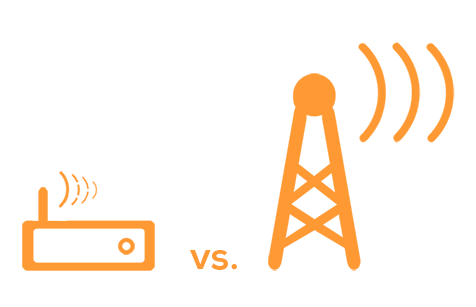 The FCC has ignored Globalstar’s request to make its spectrum available for cellular use, entertaining only its Wi-Fi proposal, which means users will be restricted to transmitting signals that are 10x lower than typical cellular signals.